What Is Makhana - Introduction
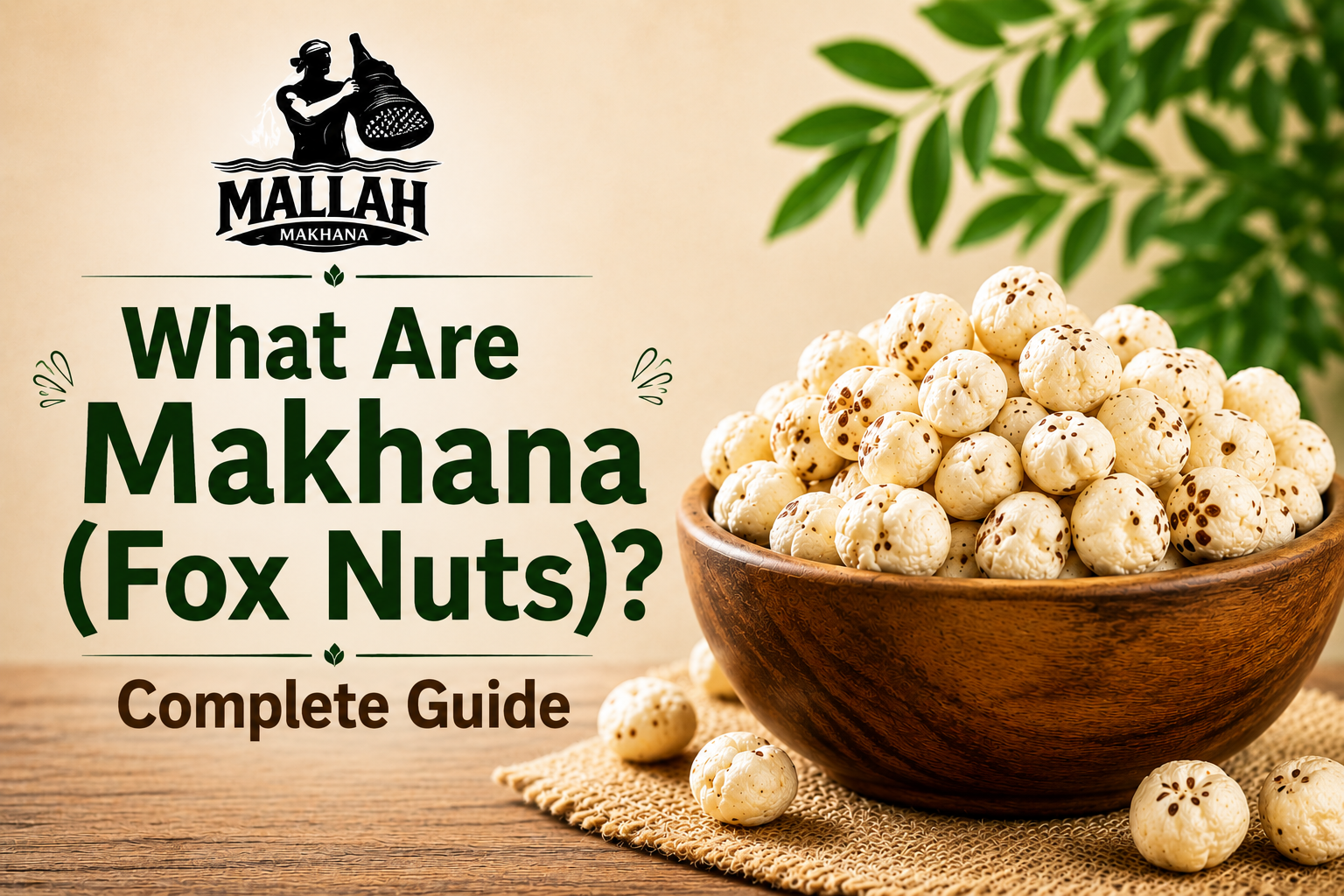
Makhana is the most delicious and healthy snacks enjoyed by people everywhere in the country as well as abroad. Makhana is also referred to as a popped lotus seed or fox nut. This snack can be identified with the crunchy texture and rich in nutritional value. In both simple forms as a roasted treat or more complicated dishes, this ingredient is gaining popularity as a healthy snack.
Makhana is derived from the seeds of a plant found in the waters known as Euryale ferox, which is grown in the wetlands of Bihar in India. Being a low-calorie food, it is more digestible and can be eaten by any individual person of their age group. So, it can be considered a superfood of India.
we are going to discuss what makhana is, how makhana is collected, how makhana differs from lotus seeds, and why Bihar makhana is of better quality. we will tell you why this tasty snack is becoming increasingly popular among health freaks and food lovers.
Looking to learn more? Explore our in-depth guide 7 Amazing Health Benefits of Fox Nuts (Makhana) You Should Know to understand why this nutritious snack is gaining popularity worldwide.
Lotus Seeds vs Makhana: Are They the Same?
Some of the common inquiries asked by people regarding this subject matter are related to lotus seeds and makhana. However, despite the two terms being synonymous, they do not have any similarity whatsoever.
The lotus seeds are those seeds that are harvested from the lotus plant that is scientifically called Nelumbo nucifera. Makhana refers to those seeds harvested from another plant that grows in the water and is called Euryale ferox.
Lotus seeds vary from makhana in terms of texture and preparation process. Lotus seeds can be consumed when dried and can either be eaten directly or can be prepared as a dish for soup or dessert. Makhana, however, involves a process that includes roasting and popping of the lotus seeds, making fox nuts.
How Is Makhana Harvested and Processed?
Knowing the process by which makhana arrives in your kitchen helps you to understand the work that goes into each mouthful.
The biggest part of makhana produced in India is cultivated in the ponds and swamps of the regions where the makhana is cultivated in Bihar. This region is ideal for cultivating this kind of plant because of its climatic conditions, fertility, and traditional experience.
The process of harvesting makhana begins after the seeds fall to the bottom of the ponds. They are collected by hand, and this requires patience and experience.
Subsequently, the dried seeds are roasted at regulated temperatures and then beaten to pop them into the white and crisp kernels known as makhana. The art of roasting and popping needs great skill in order to get uniform popped seeds of high quality.
Premium makhana means the large, white and crisp kernels. Every batch of premium makhana is checked by reliable manufacturers before being packed. This ensures customers receive high quality fox nuts.
Why Is Makhana Becoming a Popular Healthy Snack?
Makhana is now much more than just a typical Indian product. It is now well known for being a healthy snack that people can consume irrespective of what kind of lifestyle they have. Regardless of whether someone wishes to be on a healthy diet or wish to lose some weight or just needs a substitute for fried snacks; makhana works very well.
There are several factors due to which people enjoy makhana, but one such factor is its low calorie content. Makhana is also one of the best high-protein snacks, which are good for those people who want to include proteins in their diet.
The second benefit of eating makhana is the fact that this food is naturally gluten-free snack and it is great for those people who do not eat gluten. Makhana is also considered a vegan snack, as it is completely plant-based product.
If you'd like to learn more about the nutrients that make makhana a popular healthy snack, don't miss our in-depth article on Nutritional Values of Makhana.
Different Ways to Enjoy Makhana
The most popular form is roasted makhana, which is roasted in a slight manner along with some ghee or oil and is seasoned with salt, black pepper, turmeric, or herbs. It makes an ideal munching snack of makhana and can be consumed with tea and at offices as well.
The flavored versions of Makhana include flavors like peri-peri, cheese, mint, tomato, and masala. The popularity of Makhana among the younger generation has increased owing to its ready-to-eat form.
Apart from being a munching snack, Makhana is also popular in India as a makhana food item. This is because it can be used to make many curries, desserts, kheer, fasting food, or snacks with dry fruits and nuts.
How to Choose High-Quality Makhana
Good quality makhana will improve both your taste and nutrition. To recognize good quality makhana, you need to examine the kernels for color (white), cleanliness (dirt-free) and uniformity of size (all uniform in size). Another feature of high quality makhana is that it is lightweight compared to low quality, it is very crunchy and does not emit any smell.
For your purchase of hygienic, moisture resistant and fresh makhana, select only those makhana which have been packed by manufacturers who strictly adhere to food quality standards.
Conclusion
From the above description, it can be clearly seen why makhana has gained popularity across the world and why it is often termed as “fox nuts.” The makhanas are snacks which are highly nutritious, offering a lot of advantages because of their mode of production in Bihar and their crispy nature as compared to other snacks.
Should you require a nutritious snack on a regular basis, wish to improve your life style by having healthy snacks, or intend to buy high-quality makhanas for reselling or for your restaurant, then make sure you source them from authentic companies.
Frequently Asked Questions (FAQs)
How is makhana harvested?
The makhana grows in the water itself and therefore is extracted from the water body after they have grown. They sink down to the bottom of the water body once they ripen and become ready for consumption; thereafter, they are popped and roasted.
Is makhana healthy?
Consequently, makhana can be considered to be healthy food owing to the presence of protein, fiber, antioxidants, and minerals in them. Moreover, makhana is low in calories and is an excellent choice of food in a healthy diet routine.
Can you eat makhana every day?
Therefore, it is possible for one to take makhana daily (in moderation) in their balanced diet since it is both healthy and filling. This makes it easy for it to fit into several healthy diets.
What are the advantages of makhana?
Besides, the nut contains plenty of protein, fiber, antioxidants, and vitamins, it is easy to digest, and makes one feel satiated for a long time (a very good choice for snack food among people of all ages).
Why are fox nuts called makhana?
In America, makhana is mistakenly called fox nuts. The right name for makhana in English would be either fox nuts (since the name is adopted from the animal that is associated with the hunting of the plant where makhana grows) or popped lotus seeds (since this is where makhana comes from).
Is makhana good for weight loss?
Being incorporated into one’s healthy balanced diet plan, Makhana will assist in losing weight due to being low in calories, fiber and high in proteins. Therefore, Makhana will suppress appetite and eliminate cravings for junk food.